La Châtaigne – A name, a story of chestnut trees
La Châtaigne
A name, a story of chestnut trees
As you walk along the path, look across the valley: you’ll see the hamlet of La Châtaigne. Its name is no coincidence – it tells of a long-standing bond with the chestnut tree, a symbol of survival in mountain life.
These sunny slopes were once dotted with grafted chestnut groves, terraced cereal fields, and goat pastures. Chestnuts were a vital part of the local diet: rich in digestible carbohydrates, vitamins, and fibre, they provided energy through harsh winters.
If you look closely, some tree trunks still show the mark of grafting: a raised ring near the base. This detail reveals ancestral knowledge: grafting selected varieties onto wild rootstocks improved yield and resistance. It was an act of care, shaped by experience.
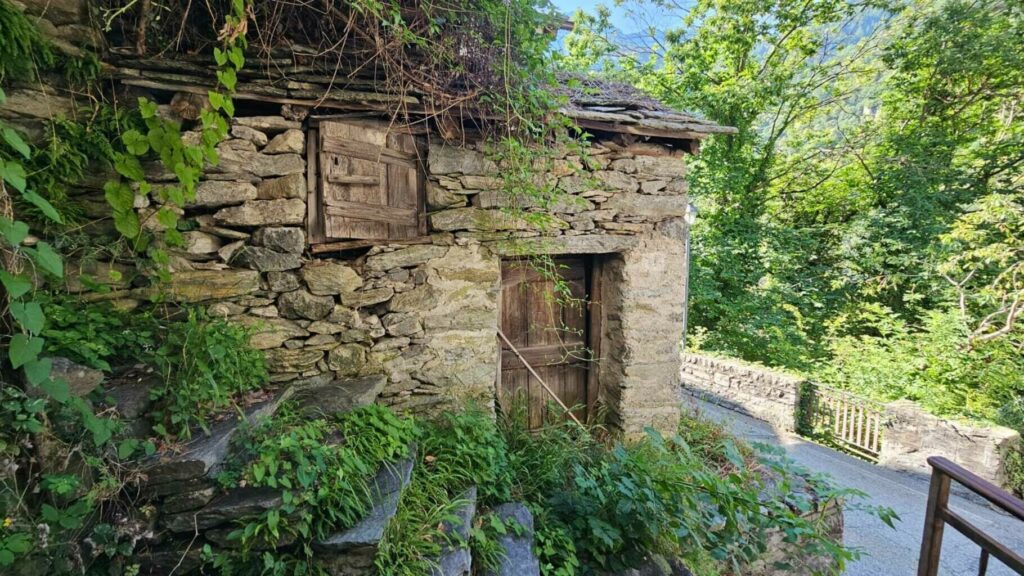
Near the groves, you could often find small drying houses known as “maisons à grecy”. These simple two-storey buildings, with a lattice floor between levels, housed a slow-burning fire below. The smoke gently dried the chestnuts, killing parasites and preserving them for the winter.
“La Châtaigne” is just one example of a phytotoponym – a place name derived from a plant. Across the Aosta Valley, such names are like keys to a living history. You’ll come across names linked to ash trees (Frassiney, Fréney), birch (Bioula, Bioley), hazel (Coudray, Collère), alder (Verney, Vernaz), cherry (Cerisey), spruce (Pessey, La Pesse), and larch (Brenvey, Brengon).
Listen to the story
Suggested activities for kids
Game: Touch and Guess
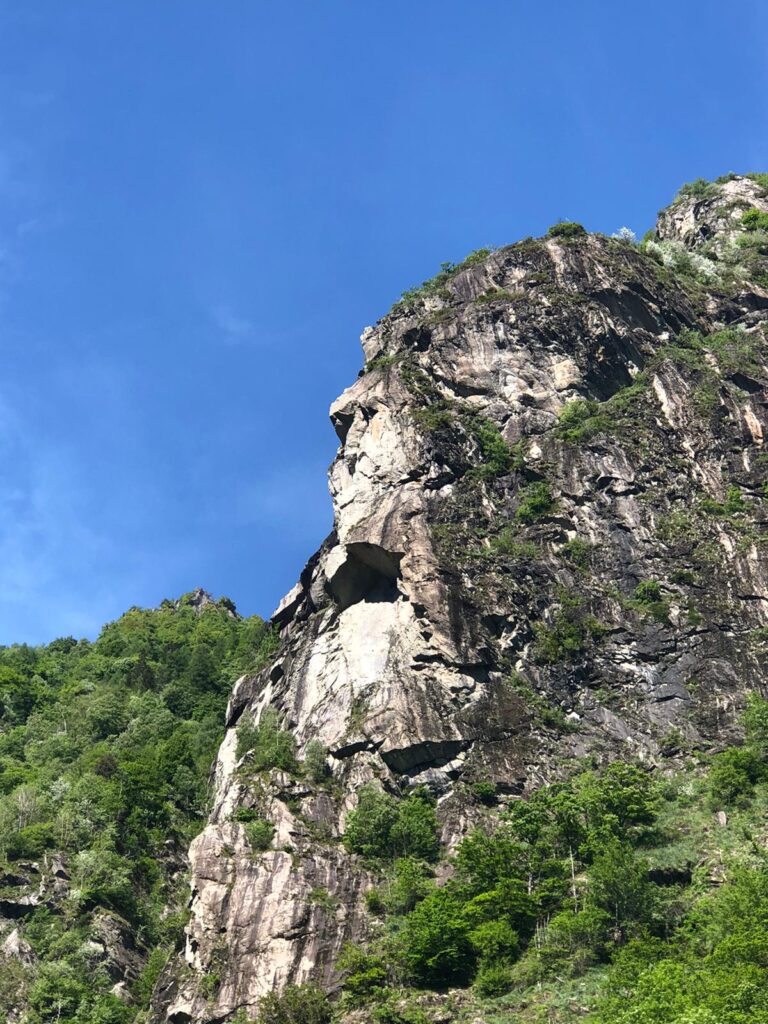
Look up and find the face of the giant. Don’t worry, he’s a kind giant—he’s here to protect the valley and the chestnut trees. Can you see him? Use the picture to help you.
Find a chestnut leaf. It looks like the one in the drawing here. Are its edges smooth or jagged? Now find a chestnut tree and touch its bark: is it rough or smooth? Do you like how it feels? Describe it in your notebook.

Suggested activities for adults
Imagine yourself as a chestnut tree!
Find a chestnut tree nearby and observe it with your full attention. Address the tree as if it were a person you do not know—approach with respect and introduce yourself mentally! These trees are living witnesses to the history of these places. Season by season you will notice different, unique features: large tender green leaves in spring, beautiful white flowers in June and July, early spiny fruits in late summer, sweet chestnuts enclosed in mature burrs fallen in autumn, the rough bark of the trunks, and the sculptural bare branches in winter.
Whisper or mentally express gratitude to these magnificent trees that have nourished generations and still offer us their sweet, rich fruit.