Veulla – Pontboset, the village of bridges
Pontboset, the village of bridges
Where water divides… human skill connects
Pontboset is a village shaped by water. Torrents, tributaries, deep gorges – here, Nature has always tested those who choose to live and move through it.
Yet this very challenge gave rise to one of the area’s most fascinating features: its bridges.
Pontboset is home to many, each with its own story.
From the first medieval wooden bridges – often swept away by floods – the community gradually built more resistant stone structures.
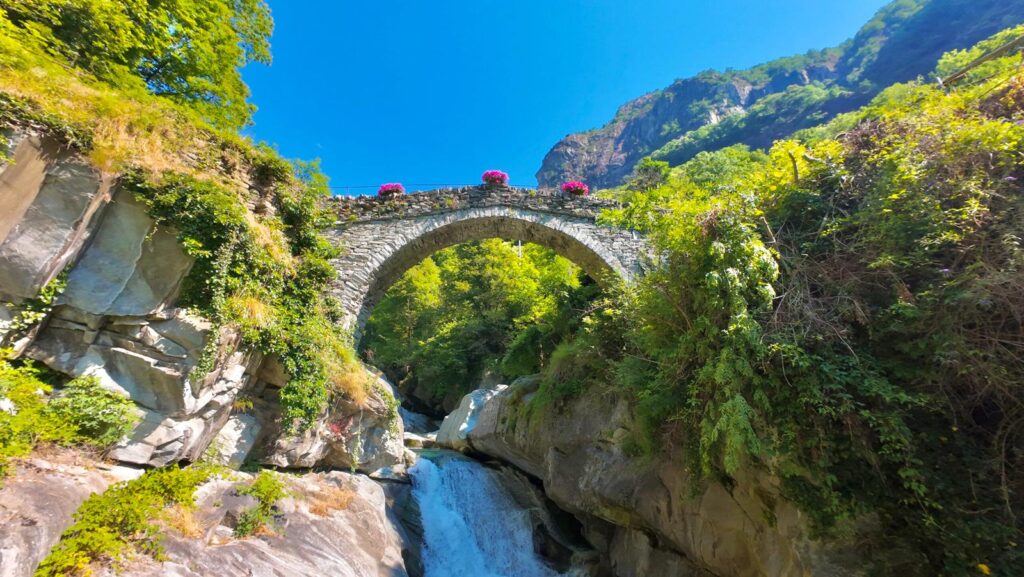
The most iconic are the “humpback” bridges, inspired by the Roman model of Pont-Saint-Martin: the Ronchas bridge, leading to the mule track for Fournier, and the Vaseras bridge, giving access to Creux and Crest.
Just as striking is the Goillet bridge, with its two asymmetrical low arches, connecting the main village of Veulla to the “envers” slope.
Further along the route, you’ll come across the Frassiney bridge – a structure with a long and turbulent history. It was only in 1879, after numerous repairs and destructions, that it was fully rebuilt in stone.
These bridges are more than functional structures: they are physical symbols of resilience, of connection, of the will to overcome the harshness of the land.
Crossing them means stepping into the living history of a community that met challenge with creativity and strength.
Listen to the story
Suggested activities for kids
Game: The Bridge Guardian
Cross the Ronchas bridge in silence. Close your eyes and listen to the stream. If you feel brave, cross with your eyes closed, holding the hand of a friend. Draw or write about what you think might live under the bridge. There’s a story that says a fairy used to visit the Ayasse stream every Sunday during church, to comb her long hair that touched the water—and then vanish right after.
Suggested activities for adults
The bridges
Stand at one end of the bridge and attentively observe what catches your eye. Then cross the bridge, turn around, and observe the opposite side from what you saw first. Mentally note differences of vegetation, light, shapes, and reflect on the symbolic value of the bridge—a human creation connecting parts that appear distant.