Carlantze – Where water holds stories
Carlantze
Where water holds stories
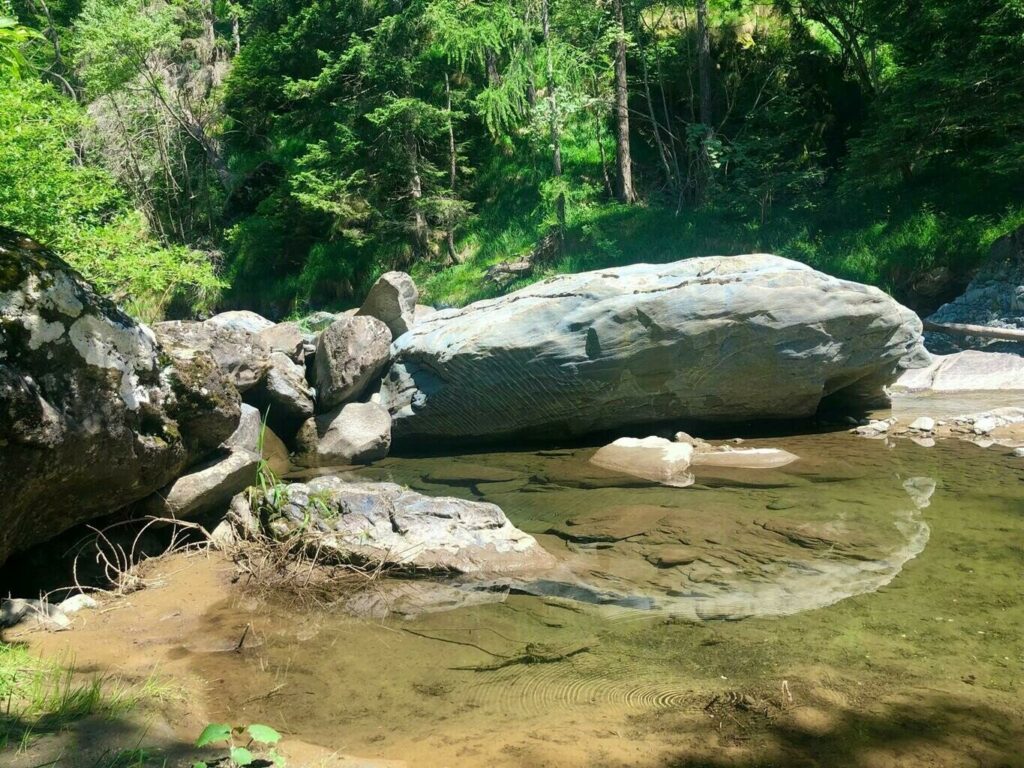
NIn the quiet of the hamlet of Carlantze – once shaped by daily toil, now embraced by the forest – the Ayasse stream flows on. It winds between rocks, pools, and cascades, with a voice that is ancient and clear.
Here, along its banks, fishing was once a matter of survival, just like hunting. A way to eat, to live, to understand the rhythm of Nature.
An ancient practice, now regulated
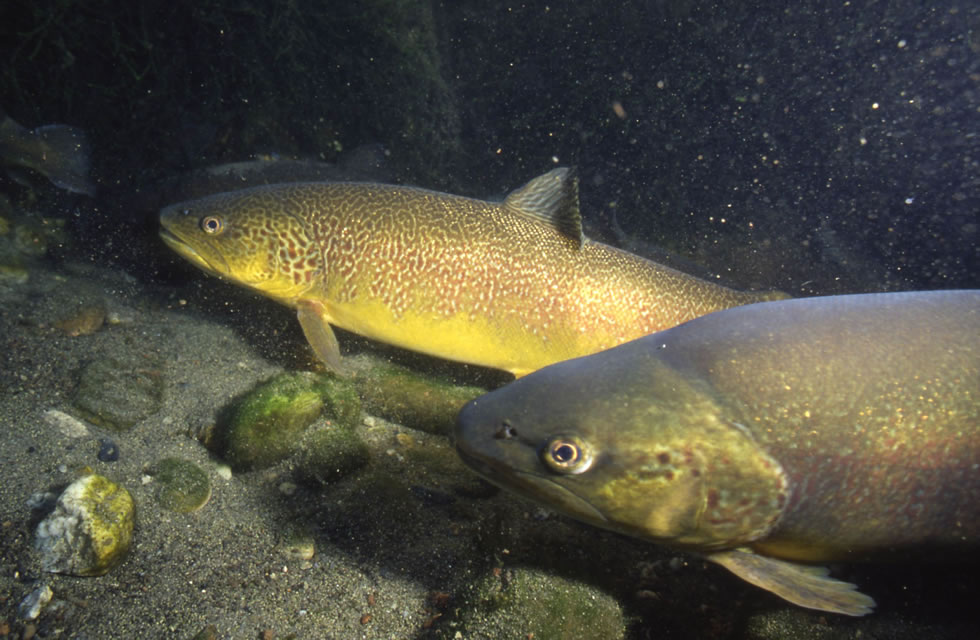
Today, fishing is mostly a sport, governed by Regional Law No. 29 of 1983 and the annual fishing calendar. Yet in places like this, it still carries a deep connection to the land. The Ayasse is one of the most wild and untouched streams in the Aosta Valley: it flows through narrow gorges and deep pools protected by large boulders. These are the waters where wild trout, descendants of the original local strain, thrive.
Further upstream in the municipality of Champorcher, there’s also a tourist fishing reserve, established in the 1970s. It spans about 2 km, marked with signs, and is generally open from spring to autumn. The most common fish here is the rainbow trout, restocked regularly with adult specimens.
Native and introduced species
Aosta Valley’s waters host a variety of fish species: some native (like the marble trout, Italian grayling, European minnow, white bleak, and bullhead), others introduced by humans, such as brook trout and brown trout. To protect biodiversity, fishing for native species is prohibited, except for the European minnow.
Lakes and rivers of Pontboset and Champorcher
Mountain lakes are also popular fishing spots:
- In Champorcher: Lakes Misérin, Chilet, and Vercoche
- In Pontboset: Lago Nero in the Manda valley
As you walk along the Carlantze trail, pause to listen to the water.
Some still see it through the eyes of a fisherman. Others simply marvel at its clarity.
Because water, like memory, flows, holds, connects.
Listen to the story
Suggested activities for kids
Game: Secrets of the Water
Look at the stream. If you were a trout, where would you hide? Draw your secret hiding place among the rocks.
Stay quiet near the riverbank. If you’re lucky, you might spot a dipper bird diving into the water to fish!
Suggested activities for adults
French philosopher Gaston Bachelard wrote:
“Happy is the one awakened by the fresh sound of a stream—the true voice of living Nature. For them, every new day takes on the dynamic quality of a birth.”
This wooded segment of the trail offers an emotional encounter with the Ayasse stream. Water is ever-present—you hear its voice even when the trail moves away.
Pay attention to its changing voices: sometimes calm and slow, sometimes rushing wildly through gorges you’ll pass. Walking silently through part of this section helps you notice these subtle shifts.
You may then mentally note emotional states arising from the sound, colors, clarity of water, and the cool feel when you approach accessible, flat streambank areas.
Water is deeply embedded in human nature: our body is about 60% water, we spent nine months in the amniotic fluid, and Earth itself is over 70% covered in water.
Each of us has a multisensory, profound relationship with water—this trail invites you to explore it.
Listen to Ayasse’s voice, admire its shades, sense humidity and temperature changes when nearer or farther, feel its coolness if possible.
Happy explorations!