Chardonney – Where water powered the work
Chardonney
Where water powered the work

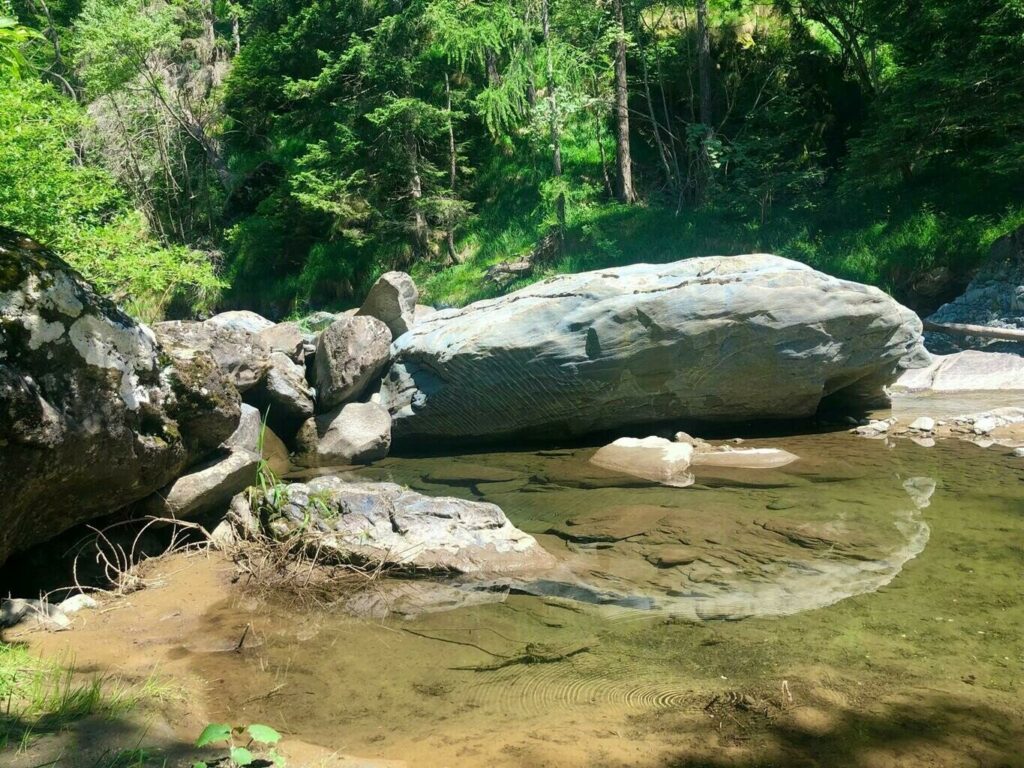
In the heart of the valley, between Château and Chardonney, water was never just a stream – it was the driving force behind daily life and labour.
Once, along this stretch of road, stood a cluster of mills and fulling devices, ingenious mechanisms that used the power of water to grind rye or full woolen cloth – a process that compacted and strengthened fabrics. Powered by camshafts, these fullers were an early example of rural proto-industry.
Today, a remarkable witness to this past remains: the Glair mill, beautifully restored and open to visitors. Next to it, the Maison de Thomas, a hemp museum, offers another window into the traditional craftsmanship of the valley.
A village with many voices
Chardonney isn’t just one village – it’s a network of hamlets, each shaped by geography and purpose.
- The Glair (or Glarey), near the stream, takes its name from lou ghier, the gravel left by floods in alluvial zones. Today it hosts a shady pine area, ideal for a rest surrounded by Nature and memory.
- La Lex (or Leys), the upper part of the village, is home to the chapel of Saint Pantaleon, with a painted wooden spire unlike any other in the Aosta Valley.
- Outre-Pon (Trepon, Delà de l’eau): beyond the bridge, on the road to Laris, once stood another cluster of houses, along with a communal bread oven and a lime kiln – now disappeared, but remembered through the preserved buildings.
A landscape shaped with care
If you look uphill near the village of Perruchon, you’ll still see terraced fields – once used to grow cereals, a staple of peasant diets. Every stone, every step tells the story of patient labour, adapting to the mountain without ever forcing it.
Chardonney is a living example of how Nature and culture intertwine. Here, water was not an obstacle, but a force to understand, to respect, and to put at the service of the people.
Walking along Au fil de l’eau, let the sound of the stream, the traces of ancient cultivation, and the names full of memory guide your steps.
Because here, every detail speaks. And every voice teaches a lesson in resilience.
Listen to the story
Suggested activities for kids
Game: Barefoot Hide and Seek
Have someone you’re walking with blindfold you. Let them guide you barefoot over different forest surfaces: grass, gravel, moss, leaves… When you’re done, switch roles and guide them!
Game: Find the Tree
Blindfold a friend and take them to a tree you like. Let him explore it with all his senses: how does it smell? How does it feel? Does the wind make it sing? Then lead him back and take off the blindfold. Can he find “his” tree? If not, try again with a closer one—and then it’s your turn!
Suggested activities for adults
Walk through the larch forest on the right bank of Ayasse. Choose one that attracts you. Approach quietly. Observe it from its base and exposed roots that ensure stability. Continue up its trunk—touch the gray, rough bark gently.
If you can, sit beside it or stand with your back and hands pressed to the trunk. Feel its solidity, stability, rootedness—and how these qualities are offered through contact. Stay a moment, breathing slowly, hands gently on the bark.
Then lift your gaze to admire its branches and elegance, reaching bravely toward the sky with its pointed crown.
When you feel it’s time to leave, step away and silently thank the larch for this shared experience.